Showing posts with label Cooper's Hawk. Show all posts

Tuesday, March 04, 2008

Hawk - Sharp-shinned or Cooper's?

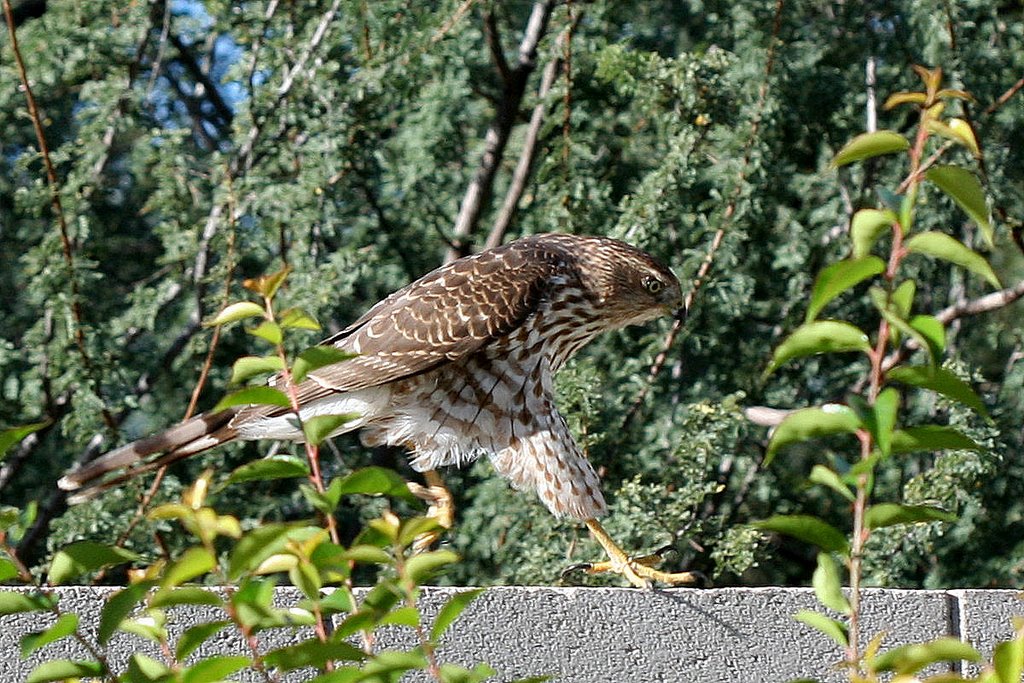
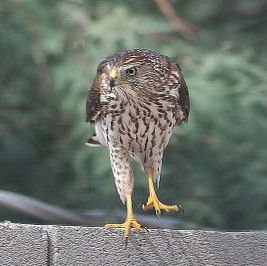
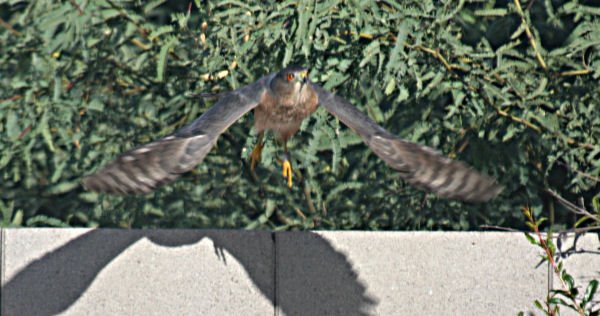
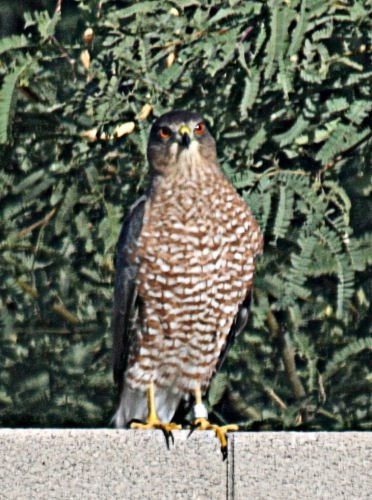
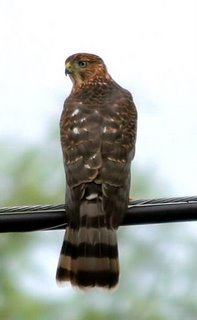
This hawk has been hunting in our patio for the past couple of weeks. I thought it was a Cooper's Hawk, but a friend thinks it might be a Sharp-shinned Hawk. The Project Feederwatch web site shows the differences, but I'm still not sure. Could someone please identify it for me? I can see it's a juvenile, because it has red eyes. Adults have red or orange eyes.


Sunday, November 05, 2006

Cooper's Hawk - once again

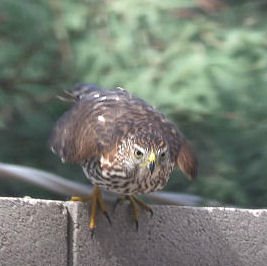
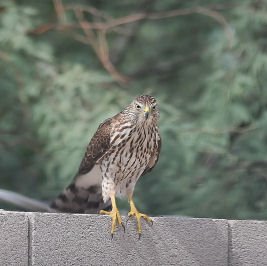
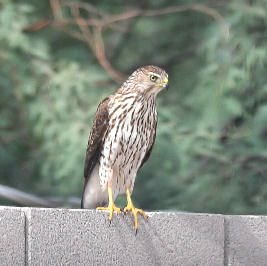
The juvenile Cooper's Hawk has been causing havoc in our patio. When I look out and see no birds, I'm pretty sure it's around. On Saturday morning, this handsome bird was sitting on the wall. I had the 100 mm. macro lens on the camera and didn't have time to change it, but managed to get a couple of shots before it flew away.
(Click on photos for enlargements)
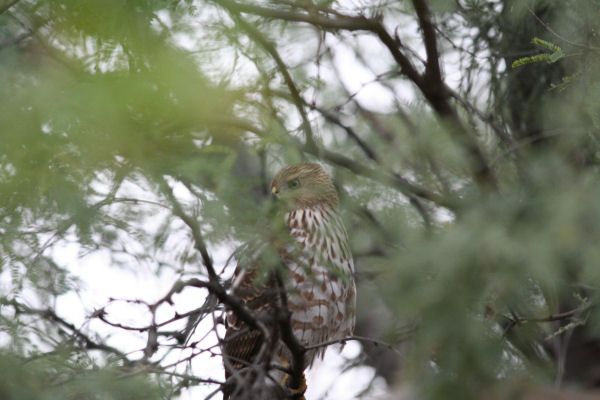
On Sunday, I tried again with the zoom lens set at 200 mm. The hawk stared at me as I came closer and closer, but didn't seem at all fazed by my presence. Eventually, it flew up into the mesquite tree,but not before it had posed handsomely for me.This Cooper's Hawk is the only one that hangs out regularly in our backyard. We've seen several other hawks in the neighbourhood, including Red-tailed Hawks, Harris Hawks and at least one adult Cooper's Hawk which came into our yard about a month ago. Three Red-tailed Hawks, a female and two juveniles, hunt from a gigantic eucalyptus tree across the street in the mornings.

Other posts about Cooper's Hawks in our backyard:
09-13-06 - Cooper's Hawk (my first sighting of one)
10-03-06 - Adult Cooper's Hawk
10-04-06 - Cooper's Hawk in our Backyard (summary post - for IATB)

Wednesday, October 04, 2006

Cooper's Hawks in our Backyard (summary post)

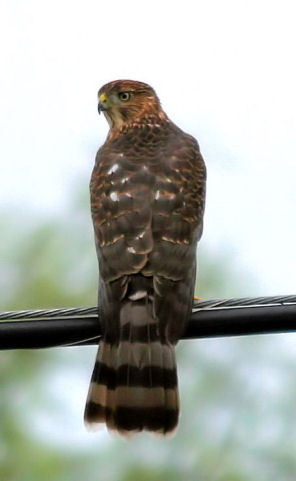
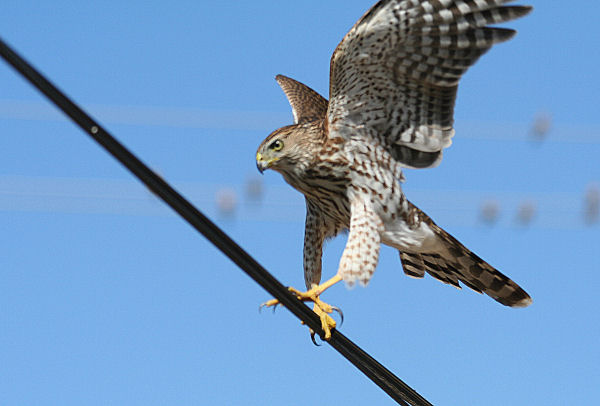
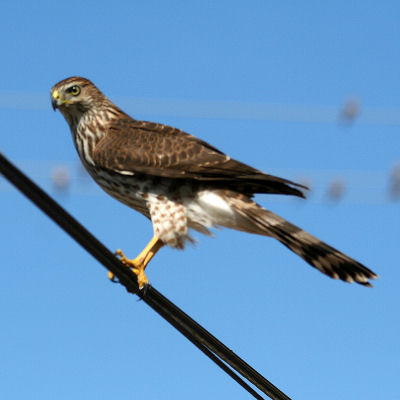
Last July, K. and I watched a hawk chasing a dove. It disappeared behind the trees. A few minutes later, all the birds at our feeders took off and disappeared. We looked out and saw this beautiful bird on the power line behind our house.It's not a hawk I've seen before and at first I thought it was a falcon. t.beth (Firefly Forest) kindly identified it for me as a juvenile Cooper's Hawk.

The conservation status of Cooper's Hawks is described on Cornell's All About Birds web site:
Declines of the Cooper's Hawk in the late 1940s and 1950s were blamed on DDT and pesticide contamination. Populations started increasing in the late 1960s, but it is still listed as threatened or of special concern in a number of states. Appears to be adapting to breeding in urban areas, which may help increase populations. Project FeederWatch data indicate stable or increasing numbers over the last 15 years.
A juvenile Cooper's Hawk is now a regular visitor to our neighbourhood. I usually can tell when it's nearby because I hear the flap of hundreds of wings as all the birds feeding in our patio take off instantly to seek cover.

A couple of weeks ago, as I was getting out of the shower, I saw this beauty on the telephone wire right outside our bedroom window. I ran for the camera - no time to dry off - and took photos through the window. (The fuzzy blobs in the back are doves on the power lines behind our house. The hawk doesn't go after them if they're stationary.)
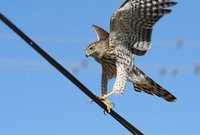
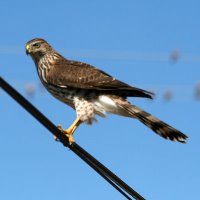


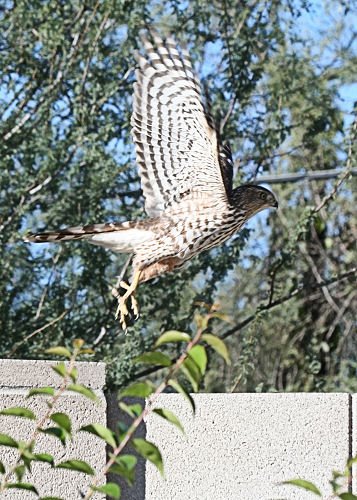
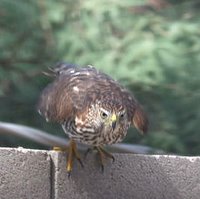
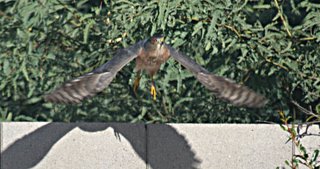
The Cooper's Hawk flew to the patio wall and waited. It spotted its prospective prey and took off.
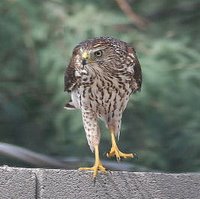


It took off in a flash. My next photo was of a blank wall. He disappeared from my view, so I don't know if his hunt was successful.

Another Cooper's Hawk flew into the yard last week and spent some time hunting finches (unsuccessfully) in a small xylosma bush.
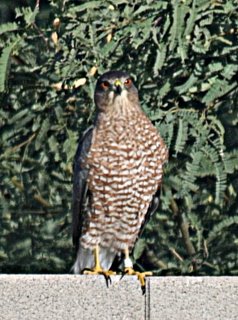
Unfortunately, I couldn't get close enough for a decent photo, but these show its fantastic red eyes and dark grey back, indicating it's an adult. (Juvenile Cooper's Hawks have brown backs and golden eyes.) It wasn't until I processed the photo that I noticed that this hawk's been banded.
Tuesday, October 03, 2006

Adult Cooper's Hawk

Well, it's been a long time since I've put a post up, but I had to share this Cooper's Hawk, which flew into the yard on Friday morning and spent some time hunting finches (unsuccessfully) in a small xylosma bush.

Unfortunately, I couldn't get close enough for a decent photo, but these show its fantastic red eyes and dark grey back, indicating it's an adult. (Juvenile Cooper's Hawks have brown backs and golden eyes.) It wasn't until I processed the photo that I noticed that this hawk's been banded.

Wednesday, September 13, 2006

Cooper's Hawk

On Thursday, July 24th, K. and I watched a hawk chasing a dove. It disappeared behind the trees. A few minutes later, all the birds at our feeders took off and disappeared. We looked out and saw this beautiful bird on the power line behind our house.It's not a hawk I've seen before and at first I thought it was a falcon. t.beth (Firefly Forest) kindly identified it for me:
"Your bird in the photo is a bit strange, and overall I think that it looks like a transition between an immature and adult Cooper's Hawk. Cooper's Hawks have proportionally longer tails than falcons, and your bird has quite a long tail. The one odd feature of your bird is the dark line running downward from below the eye, which is characteristic of falcons. However, Merlins and Peregrines have very dark eyes, and your bird has a yellow eye like that of an immature Cooper's Hawk. Merlins are not found in Tucson during the summer (only in the winter), but Peregrines are rare year-round residents. Cooper's Hawks are common here in Tucson, and they nest in riparian areas."
On Friday morning, when it was pouring with rain, we saw the pair flying again. We watched one of the hawks land in a mesquite tree behind our property, spreading its beautifully banded wings and tail. It was a magnificent sight to see through binoculars, but not one I could photograph through the branches. However, I found a beautiful photo of a Cooper's Hawk in flight by Jim Zipp that shows just what it looked like. The pair hung out for a couple of days in the tall eucalyptus across the street.

The conservation status of Cooper's Hawks is described on Cornell's All About Birds web site:
Declines of the Cooper's Hawk in the late 1940s and 1950s were blamed on DDT and pesticide contamination. Populations started increasing in the late 1960s, but it is still listed as threatened or of special concern in a number of states. Appears to be adapting to breeding in urban areas, which may help increase populations. Project FeederWatch data indicate stable or increasing numbers over the last 15 years.

Cooper's Hawk - 3

The Cooper's Hawk flew to the patio wall and waited.


Spotting prospective prey and preparing for takeoff:


It took off in a flash. My next photo was of a blank wall. He disappeared from my view, so I don't know if his hunt was successful.